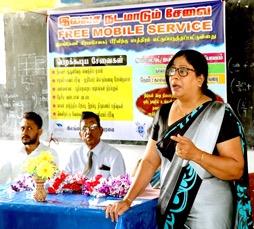
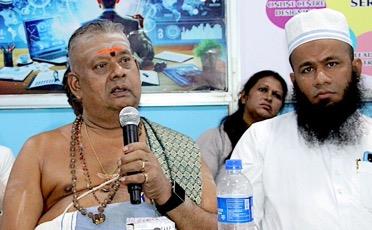
Eight actualisation activities were conducted across the country under NPC’s Plural Action for Inclusion, Reconciliation and Social Justice (PAIRS) project, funded by Misereor and co-funded by CAFOD. In addition, 15 local and provincial level dialogues with religious leaders and government officials have been held by District Inter Religious Committees (DIRCs) to advocate locally and nationally for social justice and inclusive reconciliation.
NPC gathered its grassroots network for a progress review meeting of PAIRS project, bringing together 48 leaders including heads of partner organisations, DIRC coordinators and members from 16 districts. The meeting fostered a dynamic exchange of experiences and strategies.
“This project has been instrumental in helping us with a meaningful connection with higher levels of state partnership. Government officials now recognise us because they have seen our consistent efforts to understand grassroots issues and develop practical solutions. They no longer hesitate to support our work. We have built a foundation of trust and mutual respect that will enable us to continue our mission far more effectively,” said Chaminda Piyasekara from Ratnapura.
NPC, in collaboration with the Nuwara Eliya and Kandy DIRCs, convened a high level meeting of religious leaders from the Central Province, bringing together 40 religious leaders to foster new connections for provincial peacebuilding. The dialogue reflected a strong, shared commitment to advancing inter-community harmony and mutual respect across the region.
“The programme showed how religious leaders and government officials can effectively work together on local issues. The presence of the District Secretariat signalled that community concerns can reach decision makers,” said A. Nandakumar Kurukkal, Chairperson of Ceylon Hindu Priest Association in Nuwara Eliya.
NPC convened an inter religious meeting for the North Western Province, bringing together 40 religious leaders from Kurunegala and Puttalam districts, many engaging with the official peace network for the first time. The meeting, organised in collaboration with the Kurunegala and Puttalam DIRCs and local government partners, served as a vital platform for dialogue. A key outcome was the strong consensus on the unique role of religious leaders in bridging community divides while transforming dialogue into tangible action for peace and social justice across the province.
“We as monks often lack real understanding of other faiths and their places of worship. We must instill a positive attitude about all of Sri Lanka’s religions in our children. Now is the time to build strategies for stronger religious and national cooperation,” said Ven. Karakorale Piyadassi Thero.
NPC organised a meeting of 20 religious leaders in Matara, many engaging formally for the first time. The dialogue unlocked a collective commitment to advance social harmony, with participants discussing strategies for strengthening inclusion and reconciliation at the provincial level. A key outcome was the direct identification of structural gaps, alongside a pledge from all leaders to bridge these divides through sustained collaboration.
“Participating in this inclusive interfaith discussion was a first for me in the Southern Province and a deeply valuable experience. I can affirm that the Catholic priests are fully ready to support and strengthen these harmony building initiatives into the future,” said Fr. Sampath Wilegoda.
A religious leaders’ meeting in Jaffna brought together 10 multi-faith representatives and key district officials to translate the project's goals into actionable local strategy. The forum provided a focused platform to jointly review progress, analyse challenges in community level interventions and strengthen the critical link between civil society and government. The collaborative dialogue reinforced a shared commitment to practical peacebuilding and enhanced the framework for inclusive, community-driven reconciliation efforts across the district.
A skills development programme was held for 120 youth in Moneragala, connecting youth with key government agencies and offering onsite enrollment into vocational training programmes. The programme not only opened doors to future careers but also empowered youth to advocate for their needs as their immediate feedback has shaped a request for Tamil language course materials and advanced residential training.
“The programme was beneficial and the first of its kind conducted in Tamil. For the first time we received clear, proper guidance in our own language about the training courses we can choose. This is a valuable opportunity to build a better future unlike the uncertain daily wage labour many of us face,” said L. Indumathi.
An actualisation programme in Badulla brought together 300 persons with special needs, government officers and community leaders to address critical needs by clarifying access to social protection schemes, disability benefits and assistive devices while tackling systemic barriers, institutional accessibility and information gaps.
With participation of youth leaders and Civil Society Organizations (CSOs), these initiatives engaged over 4,263 (1,421 direct and 2,842 indirect) beneficiaries, transforming identified issues into tangible solutions for peace and inclusion.